

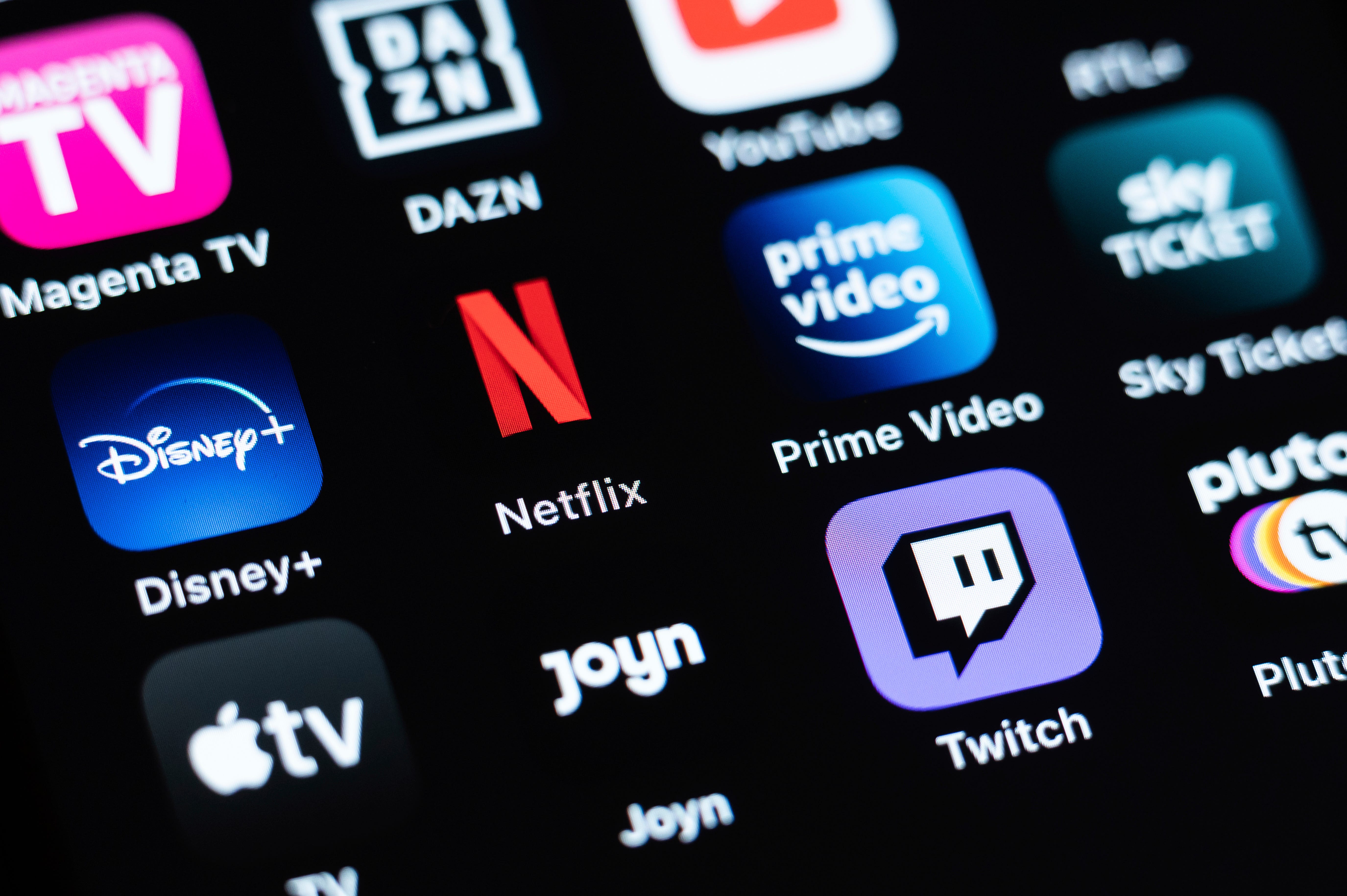
Today, we’re talking about subscriptions.
Specifically, the fact that absolutely everything in modern society - the art you enjoy, the sports you watch, the software you use to work, those cheeky videos you watch in the dark - has been dragged behind a paywall and turned into an eternal, blood-sucking monthly bill. Because God forbid you can just own a DVD of Busty Wenches XII like a respectable Victorian gentleman.
And look, I know exactly what some of you are typing in the comments section right now:
“But Francis, it’s just the modern world! It’s convenient! I like not having physical media cluttering my Scandi-minimalist apartment! It fits neatly into my monthly automated budget tracker!”
No! Stop it! You’ve been lied to! This was never about convenience, or minimalism, or your Swedish decor! And let’s be honest, your flat isn’t minimalist because you’re sophisticated. It’s minimalist because you can’t afford a bookshelf. Convenience was just the sales pitch; it’s the rag that smells lovely, until you wake up in a bathtub with your kidneys gone. This is about your life.
We haven’t just stopped owning things. We are increasingly living in a world where the most intimate corners of our daily lives exist only under the thumb of temporary licenses, revocable permissions, and endless, automated billing cycles. It doesn’t start and end with streaming apps - that would be too normal. This culture is everywhere. There’s no escape.
Your phone, your music, your films, your software, your dating app, your cloud storage, your meditation app - even inner peace is now £8.99 a month! Am I gonna leave? Nah-mastay.
How did it come to this?
PART 1: THE REVENUE MONSTER
To understand how our lives became a series of never-ending micro-transactions, we have to travel back to a mythical, ancient era known to historians as “The Year 2005.”
A simpler time. Tony Blair was in Number 10, ringtones cost £3 and savaged your parents’ phone bill, and the only thing you subscribed to was the belief that dressing like an Emo made you an outsider and deeply interesting.
Back then, capitalism operated on an elegant, fundamentally honest transaction: the double thank-you. A series of one-off trades where both parties benefit. If you wanted something, you walked into a shop, you handed over a crisp twenty-pound note, they gave you a physical object, and then (crucially) it was yours. The shop could not rescind your purchase or make you pay again. If you bought a Microsoft Office CD-ROM in 2003, you could still install it on a laptop today and type a scathing letter to your local council, and Bill Gates couldn’t do a single thing to stop you!
Although this was pre-super villain Bill Gates, before he tried to spike his wife’s drinks with antibiotics so she wouldn’t find out he was best mates with a nonce.
It was great. We didn’t know how good we had it, until the fat cats discovered a metric that completely broke the brains of every CEO on earth. A metric called ARR: Annual Recurring Revenue.
Which, fittingly, is also the sound you make when you open your bank statement. “Arrr”
ARR may sound boring, but to a CEO, it’s crack. You say “annual recurring revenue” to a boardroom and suddenly six men called Hugo start sweating profusely. And it’s not from the cocaine they took the night before.
You see, from a modern corporate perspective, selling you a high-quality product once is an operational failure. If Apple sells you an iPad, and you keep that iPad for six years because it still functions perfectly, you might as well be dead. You are a financial parasite, refusing to upgrade your perfectly fine screen! You’re supposed to drop it in the toilet after 18 months like a good little consumer! They have to spend millions advertising to you all over again just to trick you into buying the next one.
They’d rather not. So instead, they sell you a subscription. It’s a corporate wet dream: instead of selling you a piece of creative software once for £100, Adobe charges you £10 a month, forever. If you stay subscribed for ten years, they’ve made £1,200 off you for the exact same software that still crashes when you try to open a PDF. They justify it to you by offering updates, but how many Adobe users - who just want to sequence videos of weddings and nana’s birthday - are putting things in 4K 3D? James Cameron, and that’s it. Still, you’re all paying for it.
Most people use Photoshop for one of two reasons: making a flyer for a pub quiz, or removing an ex from a holiday photo. Neither of those requires “AI-enhanced neural rendering, unless your ex is really, really fat. In which case it’s probably best to destroy all evidence of your relationship.
And the data shows just how victorious the fat-cats were. Across all sectors, the global subscription economy market has exploded to over $500 billion, and corporate forecasts project it to skyrocket past $1.5 trillion by 2033. If these trends continue, by the year 2050, you’ll be renting your shoelaces. £1.99 a month for the Lace Premium tier. Cancel, and they unravel remotely while you’re legging it from whichever race riot is happening that week.
It turns out, unjustly extracting wealth from human beings with no say in the matter is a very lucrative business model! Who knew?! Well, the East India Company knew. But they at least had the decency to offer a free trial of that sweet, delicious opium.
Which brings us directly to the many-headed sanguivore that is modern entertainment.
PART 2: THE LEANING OF STREAMING
A decade ago, the tech elite stood on stages in black turtlenecks and told us that cable TV was an evil, bloated, anti-consumer monopoly. They said: “Cut the cord! For just £5.99 a month, Netflix will give you everything you could ever want, ad-free, until the end of time!”
And we did! We cut the cord. We tasted freedom. It was great. One big streaming service, making quality entertainment, ad-free, beamed into your living room. It was beautiful. You’d open Netflix and there’d be actual films on there. Films you’d heard of. Not just something called Buggery Yacht 3 starring a miscellaneous Hemsworth cousin. 5.99 for Stranger Things and Making A Murderer? Why not? I could do this forever.
Or so we thought. Until every single media conglomerate on earth realised they were letting Netflix eat their multi-billion-dollar lunch. Disney pulled their movies to start Disney+. Warner Brothers built Max. Paramount built Paramount+. Comcast built Peacock. Apple built Apple TV+.
The half-priced utopia fractured into a feudalist nightmare. If you want to watch three popular shows right now—say, The Bear, House of the Dragon, and The Boys—you need three different accounts, three different passwords, and three different monthly direct debits. For most of us, the only financially viable way to watch television anymore is to stay trapped in a toxic and loveless relationship purely because our partner has the premium tier HBO login.
I don’t care that you text your ex, Katie! The new season of the dragon show starts on Sunday and I am not paying another £15 a month! I will tolerate your emotional unavailability, gratuitous infidelity and inability to emotionally regulate for the high-definition bandwidth!
You think I’m leaving a woman with Now TV Sports? In this economy? I’ll raise another man’s bastard child before I pay for Paramount+.
And this is no secret - we all know it. Nearly half of all consumers openly admit they pay way too much for the streaming services they use, and they still don’t cancel. And if you think narrative television is bad, let us take a moment to pray for the most abused, financially-violated demographic on the face of the planet: the modern sports fan.
PART 2.5: THE SPORTS SHAKEDOWN
If you are a football fan in the UK, you know what it’s like. You just want to watch your team play throughout the season. And for that, you’re treated like an ATM with legs. To watch the Premier League, you cannot just buy a ticket or a single channel. No, no, no; you need Sky Sports. But Sky doesn’t have all the matches! So, you also need TNT Sports. But wait! Amazon Prime bought a specific package of December fixtures, so you need Amazon Prime too! Oh, and if your team plays in the FA Cup, that might be on a completely different platform, and if they play in Europe, you better check who holds the broadcast rights this particular Tuesday!
Supporting a football club used to require loyalty and a scarf. It now requires the administrative skills of Andrew Huberman managing his roster of bitches. Now there’s a podcast I’d love to listen to.
You don’t need a TV guide anymore, you need a corkboard, some red string, and a degree in contract law just to figure out what channel the Arsenal game is on.
By the time you have finished subscribing to every single corporate platform required to watch twenty-two multi-millionaires kick a piece of synthetic leather around a field of grass, you could be spending well over £100 a month. You are paying more for the right to sit on your own sofa and watch football than you are to heat your house. Which is why I now watch football matches in a coat and flat cap while drinking Bovril. If I’m doing poverty, I’m doing it properly.
Even the Champions League final can only be watched if you’ve got the right subscription. And here’s the kicker: they recently moved the kick-off time for this year’s final from 8:00 PM to 5 PM under the corporate guise that it’s “so families can watch it together.”
Which family is watching the Champions League final together? Dad is shouting obscenities at the Bosnian ref, Mum’s asking which one’s Judie Bellingham, even though he’s not playing and the weans are on their iPads watching Ms Rachel teach them about shapes, bunnies and Zionist black-magic.
And after all that, after spending four figures a year to watch a literal game, they brought the ads back anyway.
Yes! The entire selling point of streaming, the literal fucking reason we agreed to this model, was that we were paying a premium to escape commercials. But now? The dynamic has inverted. Market analysis reveals that Advertising Video on Demand (AVOD) is one of the fastest-growing sectors in media.
And this goes back to narrative TV! Everyone’s in on it! Every major platform has introduced “Ad-Supported Tiers.” They didn’t lower the price of the original plan; they just rebranded your original price as the “Ad Tier” and raised the price of the “Premium Ad-Free” tier. You are now paying the exact same amount you paid five years ago, except now, during the heartbreaking final act of Kes, the mourning Northern boy is being interrupted by an ad for Fairy Liquid.
“His kestrel is dead. But are your plates truly alive? Try new Fairy Platinum Plus.”
You’re trying to have a profound emotional experience and suddenly a woman in a spotless kitchen is sexually aroused by dishwasher tablets.
This is cable television all over again. This time we have the indignity of wiring it ourselves.
We cut the cord, then they sold us each individual strand back separately for £9.99 a month.
That was part one. Part two is even more piss-boiling so subscribe now to avoid missing out.